What Zero Trust security means, its core principles and a practical roadmap to adopt it without disrupting the business.
Zero Trust is a security model built on one idea: never trust, always verify. Instead of assuming everything inside the network is safe, every user, device and request is checked every time.
The three core principles
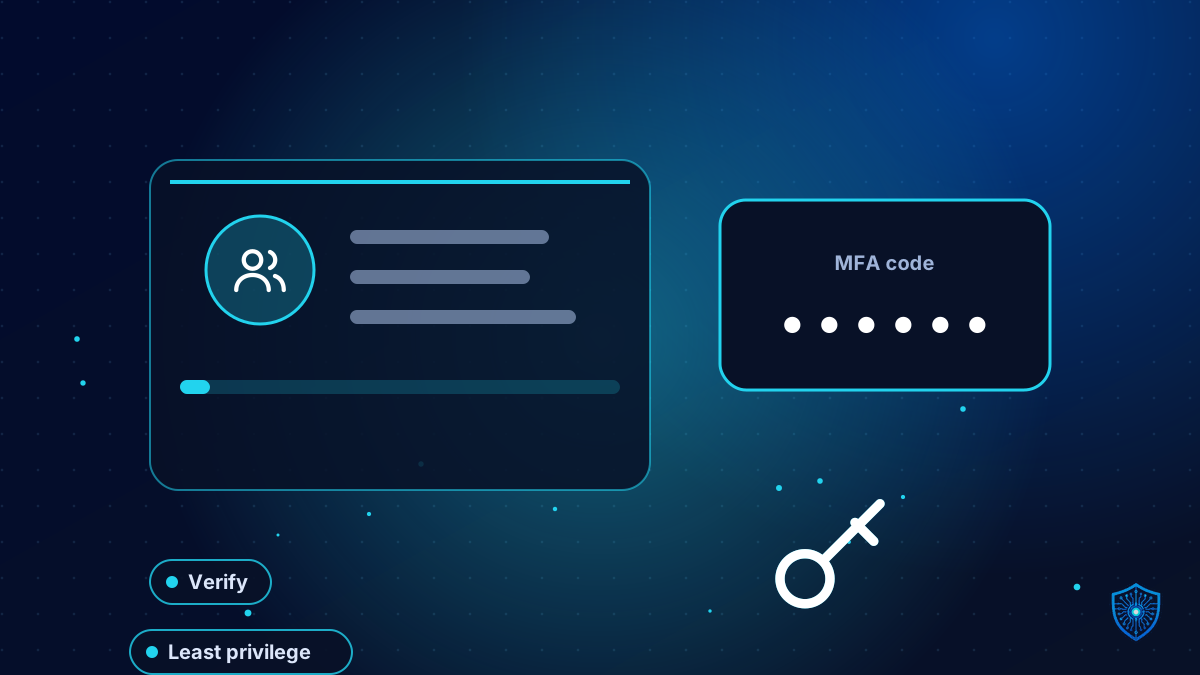
- Verify explicitly: authenticate and authorize using all available signals such as identity, device health, location and risk.
- Use least-privilege access: give people only the access they need, for only as long as they need it.
- Assume breach: design as if attackers are already inside, with segmentation, encryption and continuous monitoring.
Why it matters now
Remote work, cloud applications and compromised credentials mean the old perimeter no longer exists. Most serious incidents involve stolen or misused identities, which is why Zero Trust starts with identity.
A practical roadmap
- Secure identity. Enforce multi-factor authentication for everyone and remove legacy authentication.
- Apply conditional access. Require compliant devices and block risky sign-ins.
- Protect devices. Manage endpoints and enforce encryption and patching.
- Segment networks and applications. Limit lateral movement with microsegmentation and private access.
- Protect data. Classify, label and apply data loss prevention to sensitive information.
- Monitor and respond. Centralize logs and detect anomalies in near real time.
Common pitfalls
- Treating Zero Trust as a product you buy rather than a program you build.
- Trying to do everything at once instead of prioritizing identity and high-value assets.
- Ignoring user experience, which drives workarounds.
Our Zero Trust security services start with an assessment and a phased roadmap. You can also check your current posture with the free cyber security assessment.
conditional accessidentity securityMFAzero trust architecturezero trust security