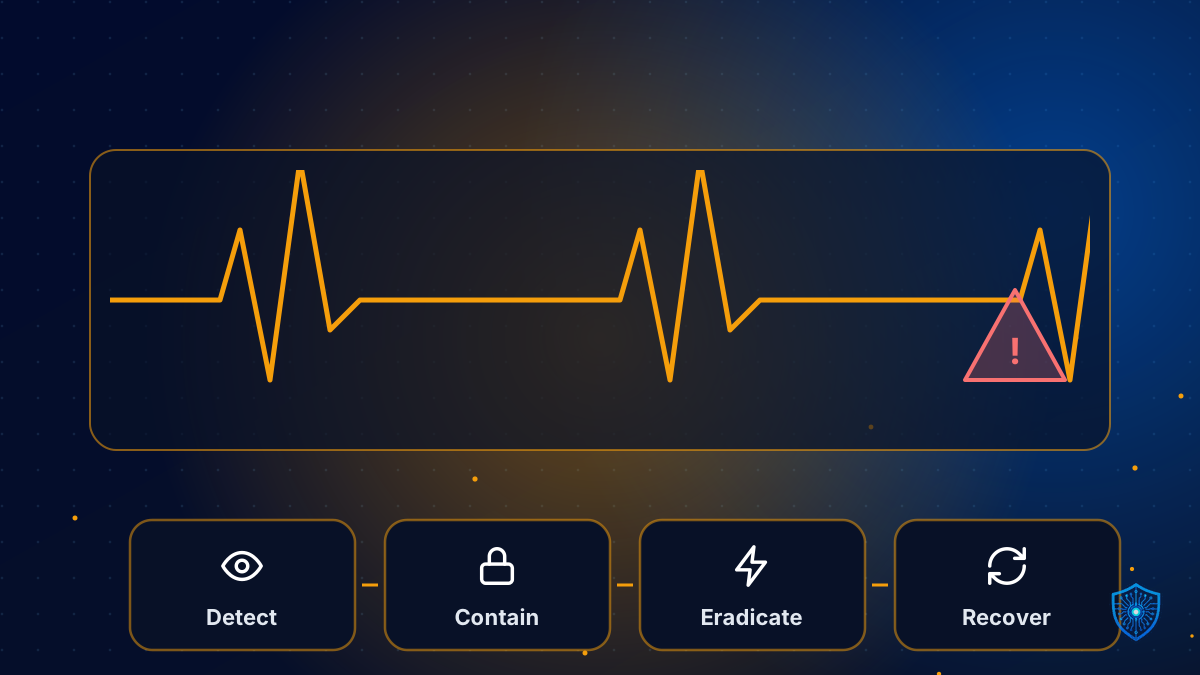
A practical timeline for the first 24 hours of a cyber incident: detect, contain, communicate, investigate and recover.
How you respond in the first hours of a cyber incident determines its impact. This timeline follows the widely used NIST incident response lifecycle.
Hour 0-1: Detect and assemble
- Confirm the incident and record what you know, with timestamps.
- Activate your incident response plan and assemble the team: IT, security, legal, communications and leadership.
- Preserve evidence. Avoid wiping or rebooting affected systems unless needed to stop spread.
Hour 1-4: Contain
- Isolate affected devices and network segments.
- Disable compromised accounts and revoke active sessions and tokens.
- Block malicious indicators such as domains, IP addresses and hashes.
- Protect backups from being reached or encrypted.
Hour 4-12: Investigate and communicate
- Determine the entry point, scope and data affected using logs and endpoint telemetry.
- Notify your cyber insurer and legal counsel as required.
- Prepare internal and external messaging; assess regulatory and contractual notification duties and deadlines.
Hour 12-24: Eradicate and begin recovery
- Remove malware and persistence, reset credentials and patch exploited vulnerabilities.
- Restore from known-good backups and validate before reconnecting.
- Increase monitoring for signs of re-entry.
Afterward
Run a post-incident review, update the plan and fix root causes. The best time to prepare is before an incident: write the plan, assign roles and rehearse with tabletop exercises.
Explore our incident response services and managed SOC.
cyber attack responseincident response planincident response servicesransomware response
This article is general information, not legal, audit or compliance advice.